Kendwa lies about six degrees south of the equator. Daytime temperatures sit around 28–33 °C all year and the sea rarely drops below 25 °C, so the question is never “will it be warm?” but “will it be wet, and will it be windy?”. The safest months are June to October and January to February. The one period to think twice about is the long rainy season of April and May.
Kendwa month by month
| Month | Weather | How busy | Our view |
|---|---|---|---|
| January | Hot, humid, mostly dry | Busy | Excellent: calm sea, clear water |
| February | Hottest month, dry | Busy | Excellent, if you like heat |
| March | Hot; rain builds late in the month | Moderate | Good in the first half |
| April | Long rains, heavy downpours | Quiet | Wettest month; some hotels close |
| May | Rain easing towards the end | Quiet | Lowest prices, unreliable weather |
| June | Dry, breezy, less humid | Picking up | Very good and still good value |
| July | Dry, sunny, pleasantly cool nights | Busy | Peak season — reserve early |
| August | Dry, sunny, breezy | Very busy | Peak season; highest summer prices |
| September | Dry and warm | Busy | Very good; crowds thinning |
| October | Dry, getting hotter | Moderate | Our favourite: fine weather, fair prices |
| November | Short rains, passing showers | Quiet | A gamble that often pays off |
| December | Hot; showers early on | Very busy from mid-month | Festive weeks sell out months ahead |
June to October: the long dry season
The south-east trade wind — the kusi — blows steadily, bringing blue skies, lower humidity and the most comfortable temperatures of the year. Kendwa sits on the sheltered side of the island, so while the east coast is properly windy (which is why the kitesurfers love it), the water off Kendwa usually stays smooth, particularly in the mornings. Boat trips that round the northern tip towards Mnemba can be bumpy in these months; take the earliest departure.
January and February: hot and still
After the short rains the wind swings to the north-east (the kaskazi). It is hotter and stickier, but the sea is often glassy and underwater visibility is typically at its best — prime time for snorkelling and diving. From Christmas to the first week of January is the most expensive fortnight of the year.
March to May: the long rains
The masika arrives during March and peaks in April. Rain falls in heavy tropical bursts, sometimes for days on end, the air is very humid and the sea can be rough. Rates fall dramatically and you may have the beach almost to yourself, but a number of hotels and restaurants shut for maintenance and boat trips are cancelled more often. Come only if you are relaxed about the weather.
November to mid-December: the short rains
The vuli brings showers that are usually brief — an hour in the afternoon or overnight — with sunshine in between. It is green, quiet and cheaper, and many regulars rate it highly.
The moon, the tides and the party
- Full moon means the Full Moon Party, usually on the nearest Saturday. Hotels in the middle of the beach fill up and charge more; book well ahead if you want to be there, and choose other dates or a room at the far end if you do not.
- Spring tides at full and new moon produce the highest highs and lowest lows. In Kendwa that changes little for swimmers, but it gives the longest window for the beach walk to Nungwi and the best sandbank trips.
- Neap tides around the half-moons are the gentlest — ideal for small children.
Ramadan and public holidays
The dates of Ramadan move earlier by about eleven days each year; in 2027 it is expected to fall roughly from early February to early March. In Kendwa’s hotels and beach bars life goes on as normal, but village cafés close by day, some staff are fasting and the Full Moon Party may be adjusted or paused. Eid al-Fitr at the end is a joyful public holiday. Tanzanian school holidays and long weekends bring more domestic visitors to the north coast.
Sunrise, sunset and daylight
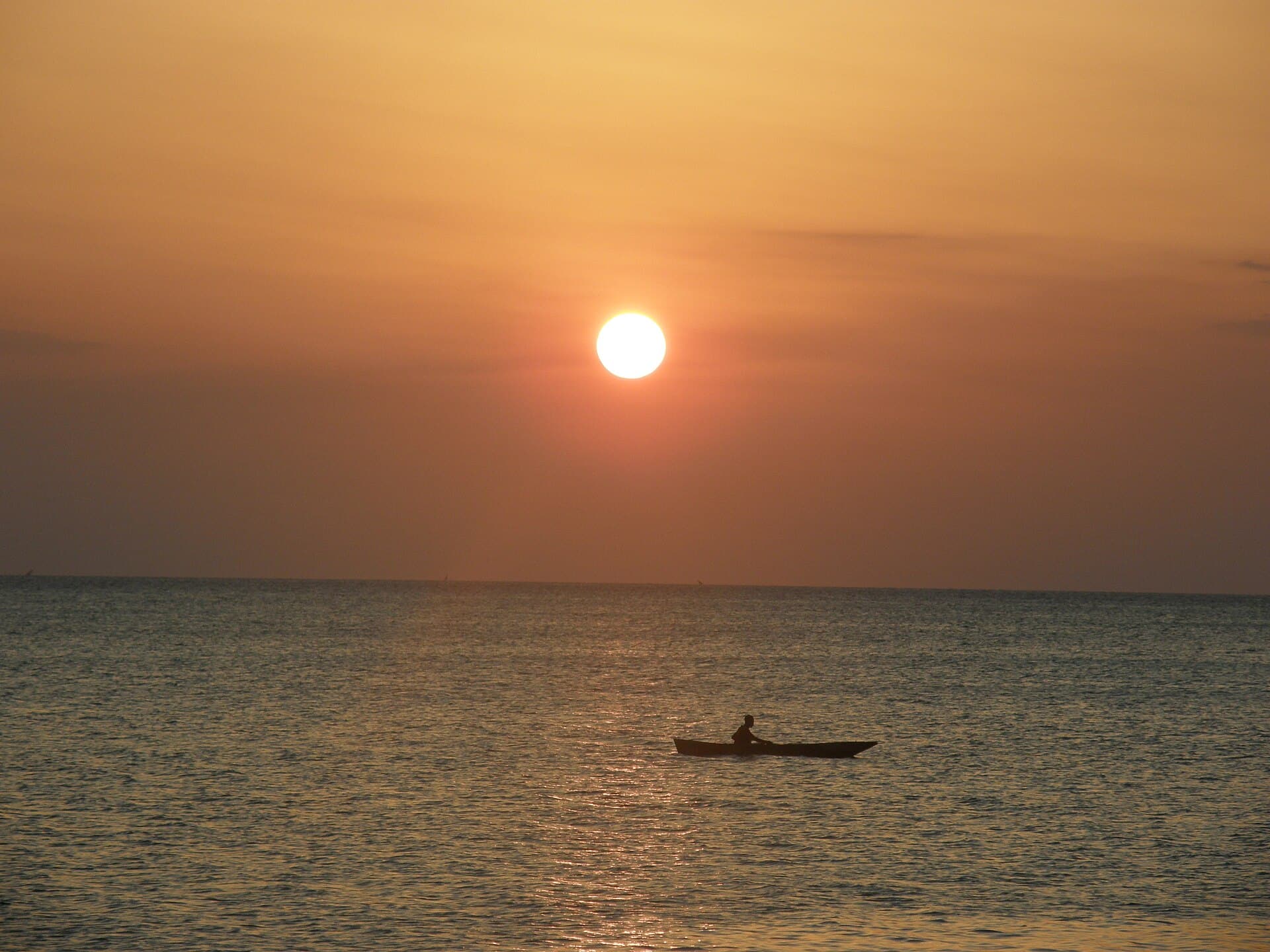
So close to the equator, day length hardly varies: the sun rises between about 6:00 and 6:30 and sets between about 6:15 and 6:45 in the evening all year. Darkness falls quickly afterwards.